Look, medical filters. Been around forever, right? But things are changing. Honestly, the biggest thing I’m seeing lately is the push for smaller, more efficient ones. Everyone’s crammed into tighter spaces, hospitals are overflowing… they need filters that can do more with less. It’s not just about catching bigger particles anymore; it’s the nano-stuff, the airborne viruses… it’s a whole new ballgame. We’re talking about HEPA filters upgraded with, like, antimicrobial coatings. Sounds fancy, huh? It is. But it's all driven by this constant need for better air quality – globally. The WHO's reports are pretty grim, and frankly, the ISO standards are getting stricter every year. Makes life interesting, keeps us on our toes, that’s for sure.
The demand is skyrocketing, especially in developing nations. You see those news reports about the air pollution in Delhi or Jakarta? It’s terrifying. And those places don’t always have the infrastructure for complicated filtration systems. So we need stuff that’s robust, can handle harsh conditions, and doesn’t require a PhD to maintain. It’s a logistical nightmare, getting this stuff where it needs to go, but someone’s gotta do it. It’s not glamorous, but it's important. I've been to enough factories to know that.
And it’s not just hospitals anymore. Think operating rooms, pharmaceutical manufacturing, even food processing plants. Anyone who needs a sterile environment is a potential customer. medical filters are becoming essential to maintaining safety standards across the board.
The Global Landscape of Medical Filters
To be honest, people don't realize how huge this market is. It's not just about hospitals, it's about global health security. The UN keeps putting out these reports about emerging infectious diseases, and a big part of the solution is preventing airborne transmission. We're talking billions of dollars worth of filters being used every year, and that number is only going up.
You've got your big players – 3M, Pall Corporation, Donaldson – they’ve been in the game for decades. But there’s also a ton of smaller manufacturers, especially in China, India, and other parts of Asia. Quality control can be… variable. I’ve seen some stuff that'll make your hair stand on end, frankly.
Defining Medical Filters and Their Significance
Okay, so what are medical filters? Simply put, they're devices designed to remove contaminants from air or liquids in a healthcare setting. That’s the basic definition. But it’s the types of contaminants they remove that really matter – bacteria, viruses, dust particles, spores, you name it. They’re used everywhere: ventilation systems, surgical masks, IV lines, even dialysis machines.
Their significance is… well, it's life and death, isn’t it? Preventing hospital-acquired infections, protecting patients during surgery, ensuring the purity of medications… these aren’t trivial things. It’s directly tied to patient outcomes and the overall efficiency of healthcare systems.
And it’s not just about preventing contamination. It’s about controlling it. Think about cleanrooms used for pharmaceutical manufacturing. Those filters aren’t just keeping stuff out; they’re keeping the whole process sterile.
Core Components and Performance Factors
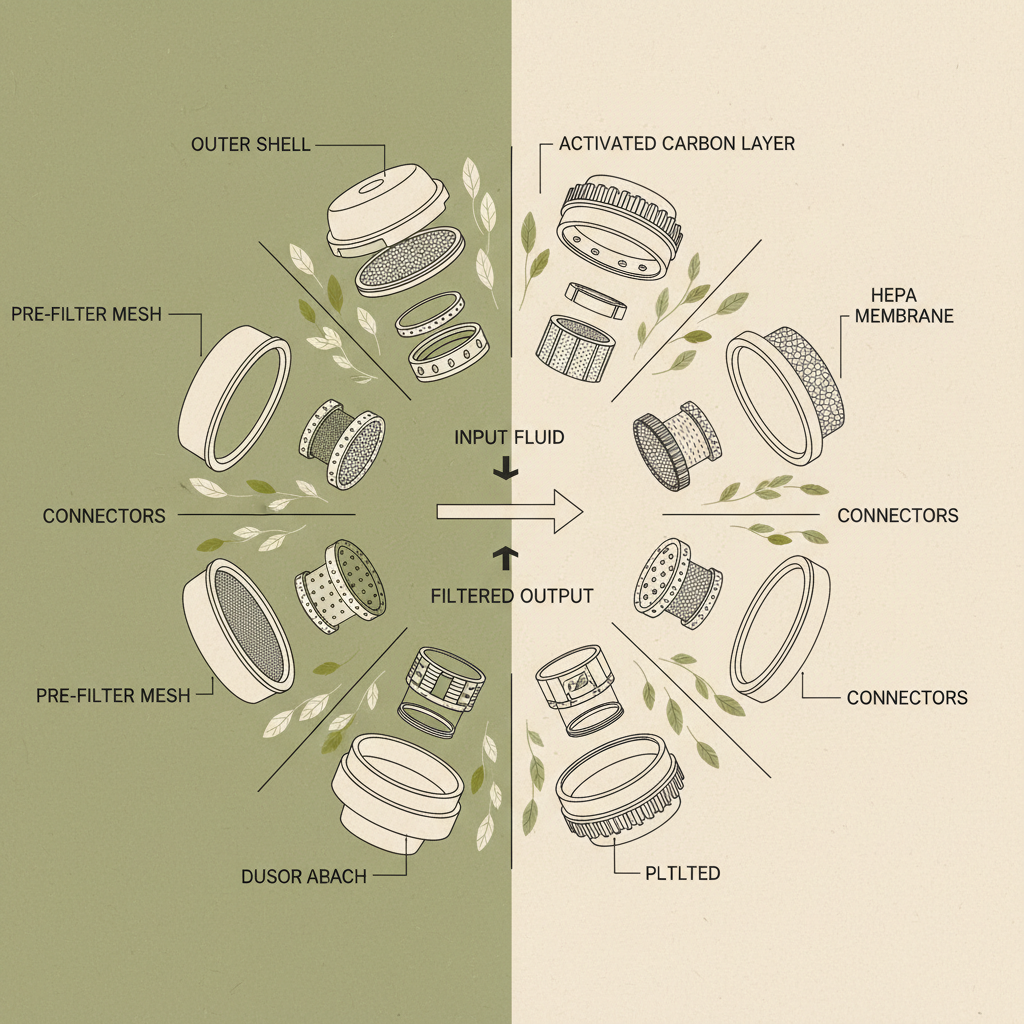
Strangely enough, people get hung up on the fancy materials, but the design is often more critical. You can have the best filter media in the world, but if it’s poorly designed, it won’t perform. Things like pleat spacing, surface area, and air flow rate… these are the things that really matter.
Now, the materials… that’s where things get interesting. You’ve got your standard fiberglass filters, polypropylene, PTFE… then you’ve got the more advanced stuff: activated carbon, nanofiber membranes, and those antimicrobial coatings I mentioned earlier. The feel of the material matters, surprisingly. Like, if it's brittle and flaky, you know it’s gonna shed particles. You can smell some of the cheaper stuff too – a sort of plasticky odor. I’ve encountered this at a factory in Vietnam last time, and I immediately knew it wouldn’t pass our testing.
Performance factors… efficiency, pressure drop, lifespan. Efficiency is obvious – how well does it remove contaminants? Pressure drop is how much resistance it creates to airflow. Too much pressure drop, and your ventilation system has to work harder, costing more money. Lifespan… well, that depends on the environment. A filter in a busy operating room is gonna need replacing a lot more often than one in a quiet clinic.
Real-World Applications and Industries Served
I mean, we talked about hospitals, but it’s way broader than that. Pharmaceutical manufacturing, biotech labs, food and beverage processing… anywhere that requires a controlled environment. Even aerospace uses specialized filters to protect sensitive equipment.
And it's not just about inside buildings. Think about mobile filtration units used during pandemics, or air purification systems deployed in areas affected by wildfires. Or even emergency responders using portable filters during disaster relief efforts.
Medical Filter Efficiency by Method
Advantages, Value, and Long-Term Impact
The biggest advantage? Peace of mind. Knowing you're providing a safe environment for patients and staff… that's invaluable. But there are also cost savings – reducing hospital-acquired infections, improving energy efficiency, extending the lifespan of equipment.
The long-term impact is huge. Better air quality leads to better health, which leads to a more productive workforce, which leads to a stronger economy. It's a ripple effect. Honestly, it's easy to overlook, but it's all connected.
Future Trends and Innovative Technologies
We're seeing a lot of development in nanofiber technology. It allows for smaller pore sizes and higher efficiency, without significantly increasing pressure drop. Smart filters, with built-in sensors that monitor performance and alert you when it's time to change them, are also gaining traction.
And there's a big push for sustainability. Developing filters from biodegradable materials, reducing waste, minimizing the environmental impact… these are all important considerations. I think that’s where the real innovation is going to happen.
Anyway, I think we’ll also see more integration with AI and machine learning, using data analytics to optimize filter performance and predict maintenance needs.
Challenges and Solutions in Medical Filter Implementation
One of the biggest challenges is cost. High-efficiency filters can be expensive, especially for smaller clinics and hospitals in developing countries. Another is proper installation and maintenance. You can have the best filter in the world, but if it's not installed correctly, it won’t work.
The solution? We need to find ways to lower costs, improve accessibility, and provide better training for healthcare professionals. Standardization is key. We need common protocols for filter testing and certification. And frankly, more collaboration between manufacturers, hospitals, and regulatory agencies.
Last month, that small boss in Shenzhen who makes smart home devices insisted on changing the interface to , and the result was a delayed shipment and a whole lot of wasted time. They thought it would make their product “more modern,” but it wasn’t compatible with the existing infrastructure. Sometimes, sticking with what works is the smartest move.
Summary of Medical Filter Challenges and Solutions
| Challenge |
Impact |
Potential Solution |
Implementation Difficulty (1-10) |
| High Initial Cost |
Limited Access for Smaller Facilities |
Bulk Purchasing Programs, Government Subsidies |
7 |
| Installation Complexity |
Reduced Filter Effectiveness |
Standardized Installation Procedures, Training Programs |
5 |
| Lack of Standardization |
Difficulty in Comparing Products |
Unified Testing Protocols, Independent Certification |
8 |
| Maintenance Neglect |
Reduced Filter Lifespan, Increased Risk |
Automated Monitoring Systems, Scheduled Maintenance Reminders |
6 |
| Supply Chain Disruptions |
Shortages, Price Volatility |
Diversified Sourcing, Strategic Stockpiling |
4 |
| Limited Data on Long-Term Performance |
Difficulty Assessing True Cost-Effectiveness |
Longitudinal Studies, Real-World Performance Tracking |
9 |
FAQS
Okay, good question. Both are high-efficiency particulate air filters, but ULPA filters are even more effective than HEPA filters. HEPA filters capture at least 99.97% of particles 0.3 microns in size, while ULPA filters capture 99.999% of particles of the same size. ULPA filters are typically used in environments that require ultra-clean air, like semiconductor manufacturing. They’re also more expensive, and require more energy to operate.
That depends. It really does. It depends on the environment, the type of filter, and the volume of air being filtered. Generally speaking, you should follow the manufacturer's recommendations. But you should also visually inspect the filters regularly for signs of dirt or damage. If you see anything, replace it. Better safe than sorry, you know? Hospital operating rooms need replacement much more often than a clinic waiting room.
Absolutely not. There’s a huge range in quality. You get what you pay for, mostly. Some filters are made with cheap materials that shed particles, others don't meet the stated efficiency ratings, and still others are poorly constructed and fall apart quickly. It's crucial to choose a reputable supplier and look for certifications like ISO 9001.
There are a few different methods. One common method is to use a particle counter to measure the number of particles upstream and downstream of the filter. Another is to use a smoke generator to visualize airflow and identify any leaks. The official tests are done in labs, but we always do some field testing, under real conditions, to see how they actually perform.
Definitely. We had a customer last year, a biotech company, who needed a filter with a very specific pore size to capture a certain type of virus. We worked with them to develop a custom filter that met their exact requirements. It involved changing the media and the pleat configuration. It’s not always easy, but it’s possible.
I think we’re going to see a lot more emphasis on smart filters, with built-in sensors and connectivity. Also, materials science is key. New materials that are more efficient, more durable, and more sustainable will be game-changers. And, like I said, integrating AI to optimize performance will be huge. It's about making filters that are not just good at what they do, but also “smart” about it.
Conclusion
So, medical filters. They're not the most glamorous part of healthcare, but they're absolutely essential. They’re evolving rapidly, driven by changing needs and technological advancements. From improved materials to smarter designs, the future of medical filtration is looking bright. It’s a complex field, but the bottom line is simple: clean air saves lives.
Ultimately, whether this thing works or not, the worker will know the moment he tightens the screw. You can run all the tests you want in a lab, but the real test is out there, in the field, where it matters. And if it doesn’t fit right, if it’s flimsy, if it doesn’t feel right… it’s not going to work. Plain and simple.