The arterial syringe vent is a critical component in medical fluid delivery systems, playing a vital role in maintaining accurate and safe medication administration. Its primary function is to prevent backflow of blood or fluid into the syringe during procedures like arterial line flushing, ensuring patient safety and reliable data collection. Understanding the intricacies of arterial syringe vent design, materials, and application is paramount for healthcare professionals and medical device manufacturers alike. This knowledge impacts not only the effectiveness of treatments but also the prevention of potentially life-threatening complications.
Globally, the demand for precise and reliable medical devices is constantly increasing, driven by aging populations, advancements in medical technology, and a growing emphasis on patient-centered care. The arterial syringe vent, while seemingly a small component, directly contributes to these advancements by enhancing the accuracy and safety of arterial blood sampling and drug delivery. The quality and performance of these vents are therefore subject to stringent regulatory standards, including those set by organizations like the FDA and ISO, creating a need for continuous innovation and improvement.
The increasing use of continuous monitoring systems and minimally invasive procedures further underlines the importance of reliable arterial syringe vents. These vents are crucial in maintaining the integrity of the arterial line, preventing air embolism, and ensuring accurate blood gas analysis, all of which are essential for effective patient management in critical care settings. The arterial syringe vent, therefore, represents a cornerstone of modern medical practice.
Introduction: Global or Industry Context
The global market for medical devices, including components like the arterial syringe vent, is experiencing substantial growth. According to a report by the World Health Organization, access to essential medicines and medical devices remains unevenly distributed, especially in low- and middle-income countries. This disparity underscores the need for affordable and reliable solutions, and the arterial syringe vent, as a relatively inexpensive but crucial component, plays a significant role. The increasing demand is driven by an aging global population and the prevalence of chronic diseases requiring continuous monitoring and intervention.
The ISO 13485 standard for medical device quality management systems dictates rigorous testing and validation procedures for components like the arterial syringe vent, further driving the demand for high-quality products. Furthermore, the rise of telemedicine and remote patient monitoring necessitates devices that are accurate and dependable, placing additional emphasis on the reliability of components like the arterial syringe vent. The increasing sophistication of monitoring equipment further heightens this requirement.
A key challenge in the sector is maintaining consistent quality while addressing cost pressures, especially in developing nations. This requires innovative manufacturing processes and material selection to provide effective arterial syringe vent solutions at accessible price points. Failure to address these challenges can lead to inaccurate readings, increased risk of complications, and ultimately, compromised patient care.
Definition & Meaning
An arterial syringe vent is a small, typically hydrophobic filter integrated into the hub of an arterial syringe. Its core purpose is to prevent the reflux of blood into the syringe during arterial line procedures, such as flushing or sampling. This is achieved through a one-way valve mechanism, allowing air to escape while blocking backflow. Effectively, it's a safety feature designed to maintain the integrity of the arterial line and prevent air embolism or inaccurate blood gas measurements.
In modern medical practice, the arterial syringe vent is inextricably linked to maintaining the accuracy and reliability of arterial blood gas (ABG) analysis. Accurate ABG readings are vital for assessing a patient’s respiratory status and acid-base balance, guiding critical care decisions. The vent ensures that the sample drawn reflects the true arterial blood composition, rather than being contaminated by blood remaining in the syringe.
Beyond clinical accuracy, the inclusion of an arterial syringe vent directly addresses humanitarian needs in resource-limited settings. Reliable ABG monitoring is essential in diagnosing and managing conditions like sepsis, respiratory distress, and shock, frequently encountered in disaster relief or remote healthcare provision. A simple, yet effective, component like the arterial syringe vent can significantly improve the quality of care delivered in these challenging environments.
Key Factors or Core Components
Material Compatibility: The material of the arterial syringe vent must be biocompatible and non-reactive with blood and common medications. Typically, this involves using materials like polypropylene or PTFE, chosen for their inertness and resistance to degradation. Compatibility ensures patient safety and prevents interference with diagnostic tests.
Hydrophobicity: A crucial characteristic is the vent's hydrophobicity, meaning its ability to repel water. This prevents blood from wetting the filter and clogging the one-way valve, ensuring consistent airflow and preventing backflow. Hydrophobicity is typically achieved through specialized coatings or the inherent properties of certain polymers.
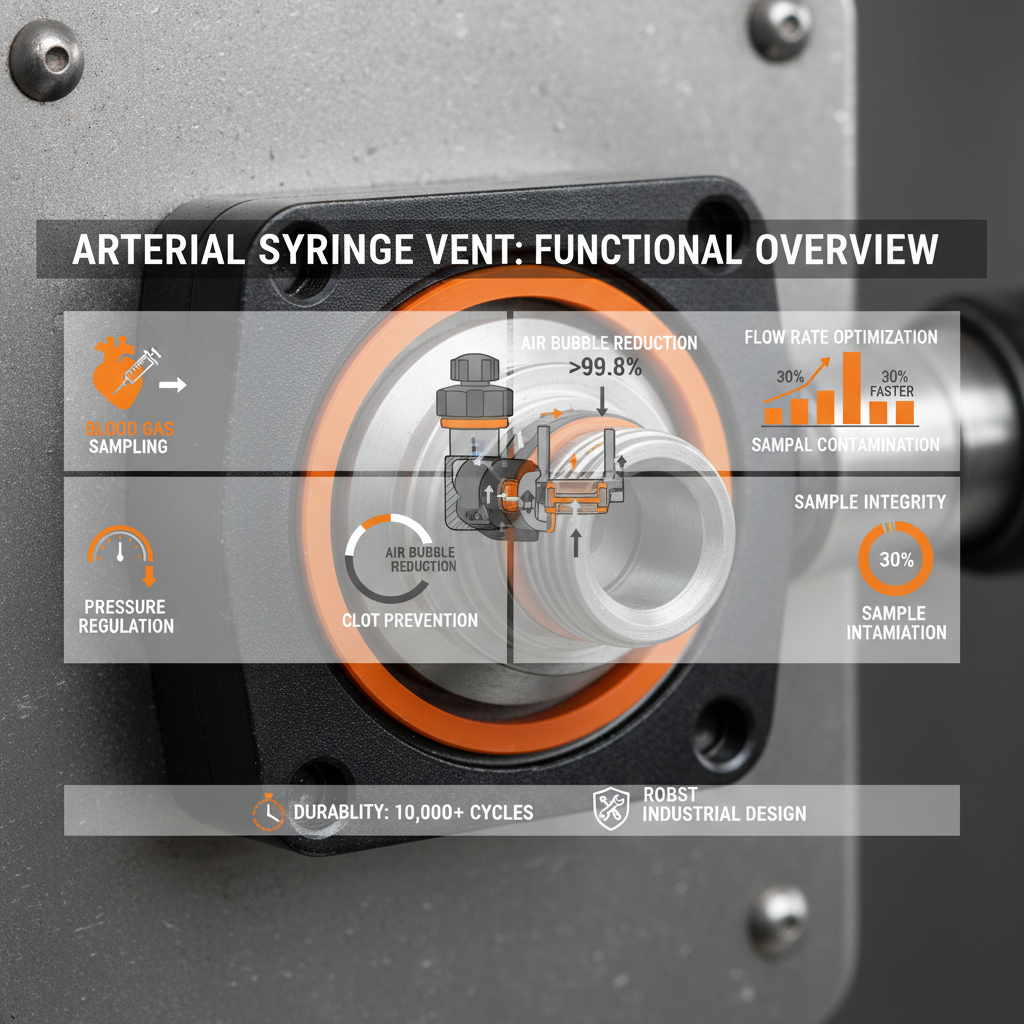
Flow Rate & Resistance: The vent must allow for adequate airflow during syringe flushing while maintaining sufficient resistance to prevent blood leakage. Optimizing this balance is critical for efficient and safe operation. The internal design of the vent, including pore size and channel geometry, plays a key role in controlling flow characteristics.
Global Applications & Use Cases
Arterial syringe vents find widespread application in critical care units, emergency departments, and operating rooms across the globe. They are essential for maintaining arterial lines used for continuous blood pressure monitoring, frequent blood gas analysis, and delivery of vasoactive medications. North America and Europe represent significant markets due to their advanced healthcare infrastructure and high adoption rates of continuous monitoring technologies.
In post-disaster relief operations, where medical resources are often limited, reliable arterial syringe vents are crucial for accurate triage and management of trauma patients. Organizations like the Red Cross and Doctors Without Borders rely on readily available and dependable medical supplies, including these essential components, to deliver effective care in challenging environments.
Increasingly, arterial syringe vents are also utilized in veterinary medicine for monitoring blood gases in critically ill animals, particularly in specialized veterinary hospitals and research facilities. Furthermore, in remote industrial zones where medical access is limited, these vents contribute to the safe and effective monitoring of workers exposed to hazardous environments or those requiring regular health assessments.
Arterial Syringe Vent Performance Comparison
Advantages & Long-Term Value
The primary advantage of utilizing an arterial syringe vent is significantly enhanced patient safety. By preventing blood reflux, the risk of air embolism – a potentially fatal complication – is drastically reduced. This translates directly into improved patient outcomes and reduced healthcare costs associated with managing complications. The long-term value lies in proactive risk mitigation and the establishment of a culture of safety within healthcare facilities.
From a cost perspective, the relatively low cost of an arterial syringe vent is outweighed by the potential financial burden of treating complications arising from its absence. Furthermore, the improved accuracy of ABG analysis facilitated by the vent can lead to more targeted and effective treatments, minimizing hospital stays and further reducing costs.
Beyond the tangible benefits, the use of reliable arterial syringe vents fosters trust between patients and healthcare providers. Demonstrating a commitment to safety and quality enhances the reputation of healthcare institutions and strengthens patient confidence. This contributes to a positive patient experience and promotes adherence to treatment plans.
Future Trends & Innovations
Future innovations in arterial syringe vent technology are likely to focus on incorporating smart features and advanced materials. Research is underway to develop vents with integrated sensors that can detect air bubbles or blood clots, providing real-time alerts to healthcare professionals. This would further enhance patient safety and optimize monitoring procedures.
The use of bioresorbable polymers is another promising area of development. Vents made from these materials would degrade naturally within the body, eliminating the need for removal and reducing the risk of long-term complications. These materials would align with a growing emphasis on sustainable and environmentally friendly medical devices.
Challenges & Solutions
A common challenge with current arterial syringe vents is the potential for clogging, particularly during prolonged flushing procedures. This can lead to increased resistance and inaccurate readings. Solutions include optimizing the internal pore structure of the vent and developing materials with improved anti-fouling properties.
Another challenge is ensuring consistent manufacturing quality and maintaining the integrity of the hydrophobic coating. Implementing robust quality control measures and utilizing advanced coating techniques are crucial for addressing this issue. Furthermore, educating healthcare professionals on proper handling and storage of these devices can prevent premature degradation.
Finally, the need for cost-effective solutions, especially in resource-limited settings, remains a significant challenge. Developing innovative manufacturing processes and utilizing readily available materials can help reduce production costs without compromising quality or performance.
Table Summarizing Arterial Syringe Vent Challenges and Solutions
| Challenge |
Impact on Performance |
Proposed Solution |
Implementation Difficulty (1-10) |
| Clogging during Flushing |
Increased Resistance, Inaccurate Readings |
Optimized Pore Structure, Anti-Fouling Materials |
6 |
| Hydrophobic Coating Degradation |
Loss of Water Repellency, Backflow Risk |
Advanced Coating Techniques, Quality Control |
7 |
| Material Biocompatibility Issues |
Inflammation, Adverse Reactions |
Use of Biocompatible Polymers (e.g., PTFE, Polypropylene) |
4 |
| Manufacturing Consistency |
Variable Performance, Reliability Concerns |
Automated Production Processes, Rigorous Testing |
8 |
| High Production Costs |
Limited Accessibility in Low-Resource Settings |
Innovative Manufacturing, Alternative Materials |
5 |
| Improper Handling/Storage |
Premature Degradation, Reduced Effectiveness |
Healthcare Professional Education, Clear Packaging Instructions |
3 |
FAQS
The lifespan of an opened arterial syringe vent is relatively short, generally considered single-use. Exposure to the operating environment introduces the risk of contamination and potential degradation of the hydrophobic membrane. While manufacturers may specify a short-term storage period if unopened, once opened, the vent should be discarded after a single procedure to ensure patient safety and prevent inaccurate readings. Prolonged exposure to humidity or contaminants can compromise its functionality.
Compatibility is crucial. Arterial syringe vents are designed to fit standard luer-lock connections commonly found on arterial lines and syringes. However, it’s essential to verify compatibility with specific equipment. Some specialized arterial lines or syringes may require specific vent designs. Using an incompatible vent can result in leakage, inaccurate readings, or failure of the system. Always consult the manufacturer's guidelines for both the vent and the associated equipment.
Used arterial syringe vents should be treated as biohazardous waste and disposed of according to local and institutional regulations. This typically involves placing the vent in a designated sharps container to prevent accidental needlestick injuries and minimize the risk of infection. Do not attempt to reuse or recylate these devices as they are designed for single-use only and may pose a contamination risk.
Several indicators can suggest a malfunctioning arterial syringe vent. These include visible damage to the filter membrane, evidence of blood leakage around the connection, increased resistance during flushing, or inaccurate blood gas readings. If any of these signs are observed, the vent should be immediately replaced with a new one. Routine inspection of vents before use is recommended.
Common materials include polypropylene, polyethylene, and polytetrafluoroethylene (PTFE). These materials are generally considered biocompatible, but allergic reactions are possible, though rare. PTFE, while highly inert, has been associated with hypersensitivity reactions in some individuals. Manufacturers typically provide material safety data sheets (MSDS) outlining potential allergens. Always check patient allergy histories when selecting medical devices.
The hydrophobic nature of the arterial syringe vent is critical for maintaining the accuracy of blood gas analysis. By preventing blood from wetting the filter and entering the sampling line, it ensures that only gaseous components are analyzed. This avoids dilution of the blood sample and prevents erroneous readings of oxygen and carbon dioxide levels. Without the hydrophobic barrier, the blood sample’s composition could be altered, leading to inaccurate diagnoses and potentially inappropriate treatment decisions.
Conclusion
In conclusion, the arterial syringe vent is a deceptively simple yet profoundly important component within the broader landscape of medical fluid delivery. Its ability to safeguard against backflow, maintain sample integrity, and ultimately protect patient safety positions it as a cornerstone of modern medical practice. Understanding the core principles of its design, the critical factors governing its performance, and the emerging trends shaping its future is essential for healthcare professionals and industry stakeholders alike.
Looking ahead, continued innovation in materials, manufacturing processes, and integration of smart technologies will drive further improvements in the reliability and functionality of arterial syringe vents. Adopting these advancements, coupled with robust quality control measures and a commitment to best practices, will ensure that these vital components continue to play a critical role in delivering safe and effective patient care. For more information and access to high-quality arterial syringe vents, visit our website: arterial syringe vent.