In the demanding landscape of modern industrial filtration, the quest for components that offer unparalleled durability, corrosion resistance, and consistent performance is relentless. At the forefront of this technological frontier are advanced Porous Filters, with a special emphasis on those crafted from robust metals. Among these, Titanium Porous Filters represent a pinnacle of engineering, offering a unique combination of properties that make them indispensable in harsh environments. As a specialized category within the broader family of Metal Porous Filters, titanium-based solutions provide a level of reliability that other materials simply cannot match. This article explores the exceptional characteristics of these filters and the corporate expertise dedicated to their manufacture.
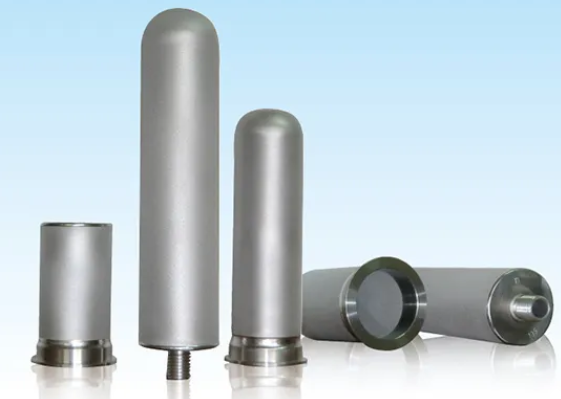
The Superior Performance of Titanium Porous Filters in Harsh Environments
Titanium Porous Filters are engineered to excel where other filtration media fail. Their exceptional performance stems from the innate properties of titanium, which is renowned for its excellent corrosion resistance and high strength-to-weight ratio. This makes them the ideal choice for processing highly aggressive media. The technical foundation for this capability is precise and rigorous, defined by the following specifications:
Material: 99.4% Min. Titanium Powder
Technical Data:
|
Filter Grade |
0.45μm, 1μm, 3μm, 5μm, 10μm, 20μm, 30μm, 50μm, 80μm, 100μm, 120μm |
|
Porosity |
28-50% |
|
Working Temperature Max |
280℃ (Wet) |
|
Compressive Strength |
0.5-1.5MPa |
|
Pressure Drop |
1.0MPa Max. |
Allowable Working Environment: Nitric Acid, Fluoride Salts, Lactic Acid, Liquid Chlorine, Sea Water, in The Air.
This data confirms that Titanium Porous Filters can maintain structural integrity and filtration efficiency under extreme thermal and chemical stress.
Understanding the Broad Category of Metal Porous Filters
Metal Porous Filters constitute a diverse family of filtration elements known for their structural robustness and ability to withstand high temperatures and pressures. While titanium is a premium choice, this category also includes filters made from stainless steel and other alloys, each selected based on the specific application requirements. The advantages of using Metal Porous Filters over polymeric alternatives are numerous and include:
- High-Temperature Tolerance:They can operate in environments far exceeding the thermal limits of plastics.
- Mechanical Strength:They resist deformation under high pressure and are suitable for demanding process cycles.
- Reusability and Cleanability:Unlike many disposable filters, metal filters can often be backflushed, ultrasonically cleaned, or thermally treated for repeated use.
- Wide Chemical Compatibility:Depending on the alloy, they can handle anything from solvents to strong acids and alkalis.
The Fundamental Advantages of Using Porous Filters
The core principle behind any Porous Filters is to provide a controlled pathway for fluids while retaining unwanted particles. The advantages of using sintered metal Porous Filters are foundational to many industrial processes. Their monolithic structure, created by sintering metal powders, creates a labyrinth of interconnected pores that offer consistent and predictable performance. Key benefits include:
- Precise Filtration:The ability to select a specific filter grade ensures that particles of a certain size are reliably removed.
- Stable Pore Structure:The pores will not change size under pressure or temperature fluctuations, ensuring consistent filtration throughout the filter's lifespan.
- Excellent Permeability:The high porosity allows for efficient fluid flow with a minimal pressure drop, enhancing energy efficiency in pumping systems.
Key Industrial Applications for Metal Porous Filters
The unique properties of Metal Porous Filters make them critical components across a wide spectrum of industries. Their reliability is crucial for maintaining process integrity, safety, and product quality. Major application areas include:
- Chemical and Petrochemical Processing:For catalyst recovery, filtering corrosive chemicals, and venting reactors.
- Pharmaceutical and Bio-technology:Used in fermenter air venting, sterile gas filtration, and the purification of process fluids.
- Food and Beverage Production:Employed in carbonation, de-aeration, and the filtration of edible oils and syrups.
- Water and Waste Treatment:Ideal for seawater desalination pre-filters and aerators due to their corrosion resistance.
FAQS about Expert Insights on Porous Filtration Technology
What makes Titanium Porous Filters particularly resistant to corrosion
Titanium Porous Filters possess a naturally forming, stable, and adherent oxide film on their surface that protects the underlying metal from attack. This makes them exceptionally resistant to a wide range of corrosive agents, including chlorides, nitric acid, and seawater, as highlighted in their allowable working environments.
In what high-temperature scenarios are Metal Porous Filters essential
Metal Porous Filters are essential in any process where the operating temperature exceeds the limits of polymer filters. This includes hot gas filtration, molten metal processing, catalyst recovery from high-temperature reaction streams, and steam line filtration, where their structural integrity remains uncompromised.
How is the filter grade selected for a specific application of Porous Filters
The filter grade for Porous Filters is selected based on the size of the particles that need to be removed to protect downstream equipment or ensure product purity. The wide available range, from 0.45μm to 120μm for titanium, allows engineers to precisely match the filter to the contamination challenge.
Can Titanium Porous Filters be cleaned and reused effectively
Yes, one of the significant economic advantages of Titanium Porous Filters is their reusability. They can be effectively cleaned using methods such as back-pulsing, ultrasonic cleaning, or chemical washing to restore their flow rates and filtration efficiency, providing a lower total cost of ownership over time.
What industries benefit most from the use of Metal Porous Filters
Industries that operate under extreme conditions of temperature, pressure, or corrosiveness benefit the most from Metal Porous Filters. This includes the chemical processing, pharmaceutical, power generation, offshore oil and gas, and aerospace sectors, where filter failure is not an option.
Our enterprise stands as a leader in the advanced field of sintered metal technology, with a deep-seated commitment to innovation and quality. We specialize in the research, development, and precision manufacturing of high-performance filtration solutions, leveraging our extensive expertise in material science to meet the most challenging industrial demands. Our dedicated team of engineers and technicians is driven by a passion for solving complex filtration problems, ensuring that every component we produce is a testament to reliability and excellence. We pride ourselves on our collaborative partnerships with clients across the globe, working together to enhance process safety and efficiency. We invite you to connect with us to explore how our specialized capabilities can address your specific filtration needs. Partner with our company to leverage the strength and durability of our advanced porous metal filters, and experience the difference that true engineering expertise can make for your critical operations.
Post Time: Dec . 12, 2025 19:10