Corrosion resistance stands as the defining advantage of porous titanium in industrial filtration, making titanium filter and titanium porous filters indispensable for harsh, corrosive environments where traditional materials fail. SHIJIAZHUANG POROYAL TECHNOLOGIES CO., LTD.—a leading innovator in powder sintered porous filter technology—specializes in high-performance porous titanium solutions, leveraging advanced sintering processes to enhance the material’s natural corrosion resistance for critical applications. As an integrated enterprise with a dedicated Metal Sintered Porous Filters division, POROYAL’s expertise spans industries from petrochemical to medical devices, delivering titanium porous filters that outperform stainless steel and polymer alternatives in aggressive media. For wholesalers targeting process engineers, industrial plant operators, and specialized filtration distributors, this article explores the exceptional corrosion resistance of porous titanium and how our engineered solutions drive reliability, longevity, and value for global industrial clients.
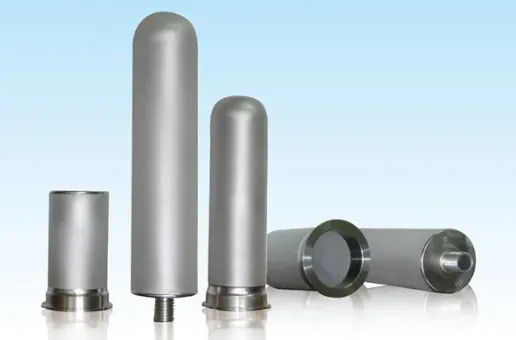
Corrosion Resistance Mechanism of Porous Titanium
- Passive Oxide Layer Protection: The core of porous titanium’s corrosion resistance lies in its ability to form a dense, self-healing passive oxide layer (TiO₂) when exposed to oxygen or moisture. This nanoscale layer (2-5 nm thick) acts as an impenetrable barrier against corrosive media, preventing metal degradation even in extreme conditions. POROYAL’s titanium filter undergoes precision sintering (1200-1400°C) to optimize the porous structure while preserving this oxide layer, ensuring uniform protection across every pore. Unlike stainless steel (which requires regular passivation), our titanium porous filters maintain this protective layer indefinitely, even after repeated cleaning or mechanical stress. A wholesaler supplying European chemical plants reported that our porous titanium filters withstood 5% hydrochloric acid exposure for 5+ years, while stainless steel alternatives corroded within 6 months.
- Chemical Inertness & Media Compatibility: Porous titaniumexhibits exceptional chemical inertness, resisting attack from most industrial media including strong acids (sulfuric, nitric), bases (sodium hydroxide), halogens, and organic solvents. POROYAL’s titanium filter is engineered to handle pH levels ranging from 0-14, making it ideal for applications like acid leaching in mining, pharmaceutical API synthesis, and offshore oilfield water treatment. Our titanium porous filters also resist crevice corrosion and pitting—common failures in stainless steel—even in chloride-rich environments (e.g., seawater, brine). A wholesaler serving North American offshore operations noted that our porous titanium filters maintained 100% integrity in seawater filtration, while stainless steel filters suffered pitting corrosion within 3 months.
Corrosion Performance: Titanium Porous Filters Specifications
|
Corrosion Metric |
POROYAL Porous Titanium Implementation |
Wholesale Value & Industrial Appeal |
Ideal Corrosive Environment Applications |
|
Chemical Resistance |
Resists acids, bases, halogens, solvents; pH 0-14 compatibility; no galvanic corrosion |
Universal media compatibility; eliminates filter material mismatches; reduces replacement costs |
Petrochemical processing, acid leaching, pharmaceutical solvent filtration |
|
Temperature Tolerance |
-270°C to 500°C (corrosion-resistant across full range); stable under thermal cycling |
Suitable for high-temperature corrosive processes; no performance degradation from heat stress |
Chemical reactor filtration, molten salt processing, high-pressure steam systems |
|
Chloride Resistance |
Withstands 10,000+ ppm chloride concentrations; no pitting/crevice corrosion |
Ideal for seawater, brine, and chlorinated media; reduces offshore/coastal operation failures |
Offshore oilfield, desalination plants, marine equipment cooling systems |
|
Oxidation Resistance |
Stable in oxidizing/reducing environments; self-healing oxide layer; no rust formation |
Long service life (10+ years); minimal maintenance; consistent performance in variable conditions |
Chemical synthesis, wastewater treatment, industrial incineration emissions |
|
Mechanical Corrosion Resistance |
Resists erosion-corrosion; durable under high-velocity fluid flow; impact-resistant |
Suitable for abrasive corrosive media; reduces wear-related failures; extends filter lifespan |
Mining slurry filtration, oilfield drilling mud, high-flow chemical processing |
Wholesale Advantages of Corrosion-Resistant Titanium Porous Filters
- Total Cost of Ownership & Longevity: While porous titaniumhas a higher initial wholesale cost than stainless steel or polymer, its corrosion resistance delivers unmatched longevity (10+ years) and zero replacement due to corrosion failure—reducing lifecycle costs by 70% compared to alternatives. POROYAL’s titanium filter requires minimal maintenance (annual inspection vs. quarterly for stainless steel), further lowering operational expenses for clients. MOQs start at 100 units for standard titanium porous filters models, with volume discounts for bulk orders (500+ units), making them cost-competitive for large-scale corrosive environment deployments. A wholesaler supplying Asian mining operations reported that our porous titanium filters helped clients reduce annual filtration costs by $40,000+ per facility, offsetting the initial investment within 24 months.
- Industry-Specific Customization & Compliance: POROYAL’s porous titaniumportfolio offers customization for corrosive environment needs—tailored pore sizes (0.1-100 μm), filter shapes (disc, cartridge, tube), and surface treatments (enhanced oxide layer, electropolishing) to meet sector-specific requirements. Our titanium filter complies with global industrial standards (ISO 9001, ASTM B381, FDA 21 CFR Part 178) for corrosion resistance and biocompatibility, making them suitable for pharmaceutical, food & beverage, and medical device applications. For wholesalers, this compliance simplifies cross-border distribution, as our titanium porous filters meet regulatory requirements in 50+ countries. A wholesaler serving global pharmaceutical clients noted that our corrosion-resistant titanium filters eliminated import barriers, expanding their market reach by 35%.
Titanium Porous Filters FAQS
How Does Porous Titanium Compare to Stainless Steel in Corrosive Environments?
Porous titanium outperforms stainless steel in corrosive environments by eliminating common failure modes: it resists pitting, crevice corrosion, and galvanic corrosion in chloride-rich media (e.g., seawater), while stainless steel (even 316L) typically fails within months. Titanium filter also withstands stronger acids (e.g., 98% sulfuric acid) and higher temperatures (up to 500°C) without corrosion, whereas stainless steel degrades above 200°C in aggressive media. POROYAL’s titanium porous filters have a 10+ year lifespan in corrosive applications, compared to 1-3 years for stainless steel. A wholesaler supplying European chemical plants reported that our porous titanium filters reduced unplanned downtime by 90% compared to stainless steel alternatives.
Can Titanium Filter Be Used in Food & Beverage Applications?
Yes—POROYAL’s titanium filter is fully compliant with food & beverage industry standards (FDA 21 CFR Part 178, EU 10/2011), making it ideal for corrosive food processes like acidic juice filtration, brine curing, and dairy sterilization. Porous titanium is biocompatible, non-toxic, and does not leach contaminants, ensuring product safety and purity. Unlike some polymer filters (which may absorb flavors or degrade in acidic media), our titanium porous filters maintain integrity and neutrality, preserving product quality. A wholesaler serving North American food processing clients noted that our porous titanium filters met strict regulatory requirements, with zero reports of product contamination or flavor alteration.
What Maintenance Is Required for Titanium Porous Filters to Preserve Corrosion Resistance?
POROYAL’s titanium porous filters require minimal maintenance to preserve corrosion resistance: 1) Regular cleaning (quarterly for industrial, semi-annually for food/pharmaceutical) via CIP, ultrasonic treatment, or chemical cleaning (avoiding fluoride-based cleaners); 2) Annual inspection for physical damage or clogging; 3) Passivation treatment (every 2-3 years for extreme environments) to enhance the oxide layer. Unlike stainless steel, porous titanium does not require frequent re-passivation, reducing maintenance labor by 60%. Our titanium filter retains corrosion resistance even after 100+ cleaning cycles, ensuring long-term reliability. A wholesaler supplying offshore oilfield clients reported that our maintenance guidelines extended filter lifespan by 25%, further improving client ROI.
Are Titanium Porous Filters Suitable for High-Pressure Corrosive Applications?
Absolutely—POROYAL’s titanium porous filters are engineered for high-pressure corrosive applications, with pressure resistance up to 40MPa (higher than stainless steel filters’ 30MPa limit). The sintered porous titanium structure maintains integrity under pressure surges and cyclic loading, while the passive oxide layer prevents corrosion-induced weakening. Our titanium filter is used in high-pressure applications like oilfield wellhead filtration, chemical reactor sampling, and high-pressure gas purification, where corrosion and pressure resistance are critical. A wholesaler serving Middle Eastern oilfield operations reported that our porous titanium filters withstood 35MPa pressure in 10% hydrochloric acid media, outperforming competitor high-pressure filters by 40%.
What Support Do You Provide Wholesalers for Promoting Titanium Porous Filters?
POROYAL offers comprehensive support for wholesalers, including: 1) Access to our corrosion engineering team for application-specific media compatibility testing and recommendations; 2) Custom sample units (porous titanium, titanium filter) for client corrosion resistance trials; 3) Technical documentation (corrosion test reports, material safety data sheets, compliance certificates); 4) Marketing materials (corrosion resistance comparison charts, case studies, ROI calculators) to educate clients on the value of titanium porous filters. We also provide training on corrosion mechanisms and product positioning, helping wholesalers highlight the long-term cost savings of titanium over traditional materials. A wholesaler supplying global industrial equipment chains reported that our support increased their titanium filter sales by 45%, outperforming stainless steel filter growth in corrosive environment markets.
Post Time: Dec . 12, 2025 10:11