THE BUYER'S GUIDE / SELECTION
Choosing Suction Filter: Application Fit and Specification Checks
A practical buyer's guide to selecting the right suction filter for medical vacuum and adjacent applications. This article explains how the self-sealing mechanism works, which material and construction factors matter, and what to verify before placing an order. All specifications are drawn from confirmed product documentation by SHIJIAZHUANG POROYAL TECHNOLOGIES CO., LTD.

Self-sealing automatic shutoff: the element must block airflow instantly when wetted, protecting the downstream vacuum pump and central vacuum system from liquid and microbial contamination.
Base material and manufacturing method: UHMW-PE sintered porous construction provides consistent pore geometry, chemical compatibility with bodily fluids and medical-grade air, and reliable activation of the self-sealing response.
What Is a Suction Filter and Why Does the Choice Matter?
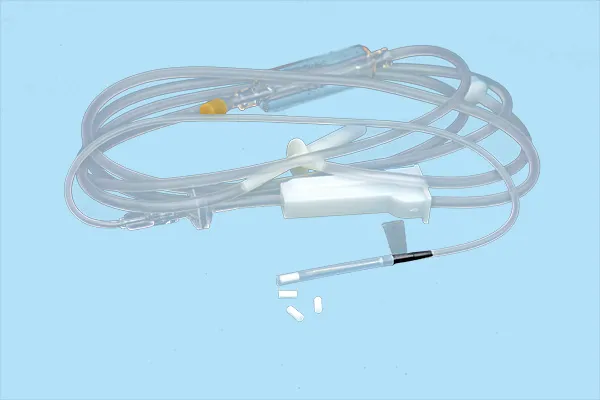
A suction filter is installed between a suction canister or liner and the downstream vacuum line. Its role is to intercept liquid overflow, particulate matter, and bacteria before they can enter the vacuum pump or a hospital's central vacuum system. Choosing the wrong unit — wrong material, wrong pore behaviour, or an absent automatic shutoff — can compromise both equipment and clinical safety.
Because these components appear in both medical and some industrial contexts, buyers need to pin down two things before ordering: how the element responds when it reaches saturation, and whether its base material is compatible with the fluids or gases present in the system.
Core Selection Criteria
1. Self-Sealing Automatic Shutoff
The defining feature of a medically rated unit is its self-sealing behaviour. When the attached canister or liner fills and liquid contacts the element, the porous structure restricts and then blocks airflow automatically and instantly — no float valve, no operator action required. This single functional characteristic drives three protections:
- It shields the hospital central vacuum system from liquid ingress.
- It guards the vacuum pump against particulate and microbial contamination.
- It acts as a bacterial barrier, reducing cross-contamination risk during clinical procedures.
Buyers specifying for suction canister or liner assemblies should confirm that their chosen product carries an explicit self-sealing design at the filter level, rather than relying on a separate float valve elsewhere in the assembly.
2. Base Material and Manufacturing Method
Material selection determines chemical compatibility, sterilisation tolerance, and the consistency of the shutoff response.
POROYAL's confirmed unit uses UHMW-PE (Ultra-High-Molecular-Weight Polyethylene) produced via a sintered porous process. What this means for procurement:
| Characteristic | Procurement Implication |
|---|---|
| UHMW-PE substrate | Suitable chemical resistance for bodily fluids and medical-grade air |
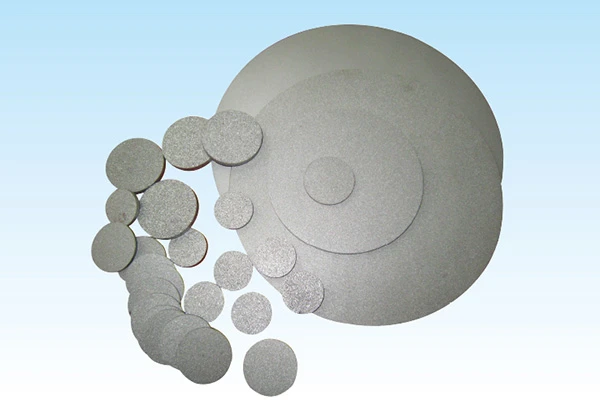
| Sintered porous structure | Uniform, controlled pore network; reliable activation of self-sealing response |
| Plastic sintered construction | Lightweight; compatible with single-use, disposable assembly designs |
Applications where metal contamination must be avoided or where single-use disposability is required align well with this construction.
3. Application Scope: Medical Versus Industrial
The confirmed POROYAL product is specifically oriented toward medical air suction — suction canisters and liners used in clinical environments. Buyers should map their own system type to the product's stated scope:
- Medical / clinical: Bedside suction, operating room assemblies, central vacuum line protection — this is the confirmed application range.
- Industrial pneumatic or vacuum conveying: Requires separate evaluation of operating pressure, temperature range, particle size, and chemical exposure that go beyond the confirmed scope of this product.
Do not assume a medically oriented component meets industrial pressure or temperature ratings. Confirm the full specification with the supplier before committing to an order.
4. Assembly Fit
A filter element does not operate in isolation; it must seat correctly inside the canister or liner. Before specifying, verify:
- Physical dimensions: Port diameter, thread type, and insertion depth must match the target canister or liner geometry.
- Single-use or reusable designation: Confirm whether the element is rated for repeated sterilisation cycles or is intended for one-time use.
- Downstream connection: The outlet interface must connect to the vacuum line or pump inlet without creating leak paths.
Applicable Product
POROYAL Suction Filter — UHMW-PE Sintered, Self-Sealing
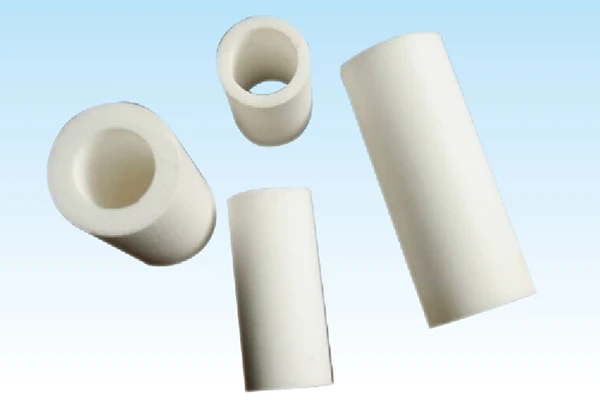
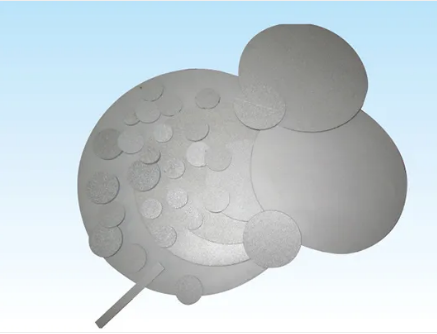
SHIJIAZHUANG POROYAL TECHNOLOGIES CO., LTD. supplies a self-sealing filter element manufactured from UHMW-PE via a sintered porous process. It is designed for use in suction canisters and liners: when the canister fills and the element becomes wet, airflow is shut off automatically, protecting the connected vacuum circuit and providing a bacterial barrier.
This product falls within POROYAL's Medical & Laboratory filtration division. It is relevant to buyers sourcing for:
- Hospital central vacuum system protection
- Operating room and bedside suction assemblies
- Medical-device OEM builds where a self-sealing air-suction element is a specified component
Pre-Purchase Specification Checklist
Before placing an order, work through each point:
- Shutoff mechanism confirmed — Does the product description explicitly state a self-sealing, filter-level response to wetting, rather than a float valve?
- Material compatibility — Is UHMW-PE chemically compatible with every fluid or gas the element will contact?
- Manufacturing method — Is the pore structure sintered (consistent geometry under load) or pleated/wound (variable under compression)?
- Application scope aligned — Is the product specified for medical air suction? Does that match your system type?
- Physical fit verified — Port size, thread type, and insertion depth confirmed against your canister or liner drawing?
- Quality documentation — What documentation does your procurement process require? Request it directly from SHIJIAZHUANG POROYAL TECHNOLOGIES CO., LTD.; no certification claims are made here.
- Order quantities and lead times — Confirm directly with the supplier; pricing and delivery are outside the scope of this guide.
Summary
For medical suction applications — particularly in canister and liner assemblies — the most important criterion is a self-sealing mechanism that shuts off automatically when the element becomes wet. UHMW-PE sintered construction, as confirmed for the POROYAL product, provides a uniform pore network suited to both this shutoff behaviour and medical-grade air filtration. Buyers working with industrial vacuum systems should evaluate whether the confirmed application scope aligns with their own operating conditions before ordering.
Contact SHIJIAZHUANG POROYAL TECHNOLOGIES CO., LTD. directly for dimensional details, quality documentation, and order information.
THE PEOPLE

About the author
THE COMPANY
SHIJIAZHUANG POROYAL TECHNOLOGIES CO., LTD.
POROYAL is dedicated to the research and development of powder sintered porous filter technology, establishing itself as a leading innovator in advanced porous material solutions. POROYAL engineers deliver high-value engineering solutions to address complex product design challenges across diverse industries, including petrochemical, oilfield, water treatment, food & beverage, pharmaceutical, chemical processing, medical devices, vacuum conveying, and other specialized applications.…
About Us ↗Visit company website ↗YOUR NEXT STEP
Bring your brief. Start a useful conversation.
Use case, specification, quantity and delivery window: make the next conversation specific.
Post Time: Oct . 28, 2026 00:21