
Fecral and stainless steel sintered fiber felts serve different filtration settings. Compare their applications, fiber diameters, porosity ranges and packaging, then use the available configuration tables to prepare a quotation that matches your process and required part dimensions.
Fecral Fiber Sintered Felt
Stainless Steel Fiber Sintered Felt
Start with the filtration duty
Fecral Fiber Sintered Felt suits diesel or gasoline vehicle particulate filtration and burner media. Stainless Steel Fiber Sintered Felt suits impurity filtration in chemical fiber, film and viscose production, high-temperature flue-gas dust removal, and petroleum, petrochemical, fuel and hydraulic-oil service.
That application split is the first purchase check for sintered fiber felt. A vehicle particulate or burner project points to the Fecral option. A process filter handling the listed liquid or gas duties points to the stainless steel option. After that, compare fiber diameter, porosity and the configuration values that your filter design requires.
Material and application fit
Fecral Fiber Sintered Felt uses Fecral fiber and has high-temperature resistance up to 900°C. Its two named uses are diesel or gasoline vehicle particulate filters and burner media. If those are the service conditions, send the operating temperature, filter dimensions and required quantity with your inquiry.
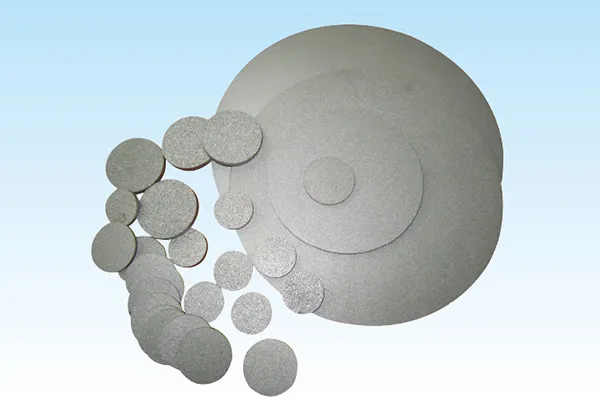
Stainless Steel Fiber Sintered Felt uses stainless steel fiber and has a multilayer structure. We supply stainless steel fiber in 316L, 304, 302, 430 and 434 materials. The felt is used for filtration in chemical fiber, film, viscose, petroleum, petrochemical, fuel and hydraulic-oil processes, along with high-temperature flue-gas dust removal. The product also has high pressure resistance, corrosion resistance, washability and reuse.
Our stainless steel fiber range can be used in metal fiber sintered felt production. Include the process medium and operating temperature when asking us to match a fiber material and felt configuration.
Fiber diameter and porosity
The Fecral felt has three paired configurations:
| Fiber diameter | Basis weight | Porosity |
|---|---|---|
| 17 microns | 1,500 g/m² | 85% |
| 22 microns | 450 g/m² | 80% |
| 35 microns | 1,500 g/m² | 88% |
These combinations let you compare the Fecral option by fiber diameter, basis weight and porosity. The 17-micron and 35-micron versions have the same basis weight, while their porosity values differ. The 22-micron version has a lower basis weight and lower porosity than the other two configurations.
The stainless steel felt has a broader diameter and porosity table. Fiber diameter runs from 3 to 100 microns, and the table gives porosity from 67% to 89%. The full range also includes thickness from 0.34 to 1.30 mm, bubble point from 360 to 13,000 Pa, and air permeability from 13 to 2,000 L/dm²·min.
| Fiber diameter | Thickness | Porosity | Bubble point | Air permeability |
|---|---|---|---|---|
| 3 microns | 0.37 mm | 67% | 13,000 Pa | 13 L/dm²·min |
| 10 microns | 0.34 mm | 78% | 3,700 Pa | 85 L/dm²·min |
| 30 microns | 0.62 mm | 79% | 1,235 Pa | 450 L/dm²·min |
| 60 microns | 0.57 mm | 83% | 600 Pa | 1,350 L/dm²·min |
| 100 microns | 1.30 mm | 89% | 360 Pa | 2,000 L/dm²·min |
The rows show how the stainless steel felt can be specified through linked structural values. In these rows, smaller fiber diameters pair with higher bubble points and lower air permeability, while larger diameters pair with lower bubble points and higher air permeability. Give us the target porosity, thickness, bubble point or air permeability when the filter design already has those limits.
How to choose between the two tables
Choose Fecral Fiber Sintered Felt when the application is a diesel or gasoline vehicle particulate filter or burner medium and the order can be defined through one of its three diameter, basis-weight and porosity combinations. Its temperature resistance reaches up to 900°C.
Choose Stainless Steel Fiber Sintered Felt when the service is chemical fiber, film, viscose, petroleum, petrochemical, fuel, hydraulic oil or high-temperature flue-gas dust removal. It gives you a larger diameter and porosity table, plus thickness, bubble point and air permeability values for process-filter design.
Picture two order reviews. For a burner medium, compare the process temperature with the Fecral felt's 900°C limit, then send the selected diameter, basis weight, porosity and part dimensions. For a hydraulic-oil or petrochemical filter, place the stainless steel table beside the required bubble point, air permeability and thickness, then provide the fluid, temperature and cleaning method.
Both felts use wooden pallet packaging, and we can arrange customized packaging according to your request. Tell us whether the shipment needs the standard pallet format or a customer-specified package.
Questions for the quotation
Which Fecral configurations can we quote?
We can quote three combinations: 17 microns, 1,500 g/m² and 85% porosity; 22 microns, 450 g/m² and 80% porosity; or 35 microns, 1,500 g/m² and 88% porosity. Send the selected combination with the application, operating temperature, part dimensions and quantity so we can prepare the quotation around the correct felt structure.
What stainless steel felt row has the highest bubble point?
The 3-micron row has the highest bubble point at 13,000 Pa. It has 0.37 mm thickness, 67% porosity and air permeability of 13 L/dm²·min. If your process design uses a bubble-point target, include that target with the medium and required dimensions so we can review the corresponding configuration.
Which stainless steel felt row has the highest air permeability?
The 100-micron row has the highest air permeability at 2,000 L/dm²·min. It has 1.30 mm thickness, 89% porosity and a 360 Pa bubble point. Send the required flow or air-permeability value with the filter area and service conditions when requesting a matched quotation.
Can the stainless steel felt be reused after cleaning?
Yes. Stainless Steel Fiber Sintered Felt can be washed and reused multiple times. It also has corrosion resistance, high pressure resistance, small pressure loss and large flow. Tell us the process medium and cleaning method so we can review the intended reuse conditions with the selected diameter, thickness and porosity.
Prepare the comparison details
Fecral Fiber Sintered Felt fits the specified vehicle particulate and burner applications, with three diameter, basis-weight and porosity combinations. Stainless Steel Fiber Sintered Felt fits the broader process-filtration applications and provides a larger structural table. Send us the medium, temperature, application, target dimensions, selected diameter, porosity, thickness, packaging preference and quantity for a quotation.

About the author
The company
SHIJIAZHUANG POROYAL TECHNOLOGIES CO., LTD.
POROYAL is dedicated to the research and development of powder sintered porous filter technology, establishing itself as a leading innovator in advanced porous material solutions. POROYAL engineers deliver high-value engineering solutions to address complex product design challenges across diverse industries, including petrochemical, oilfield, water treatment, food & beverage, pharmaceutical, chemical processing, medical devices, vacuum conveying, and other specialized applications.…
About Us ↗Visit company website ↗Post Time: Nov . 09, 2026 02:08